
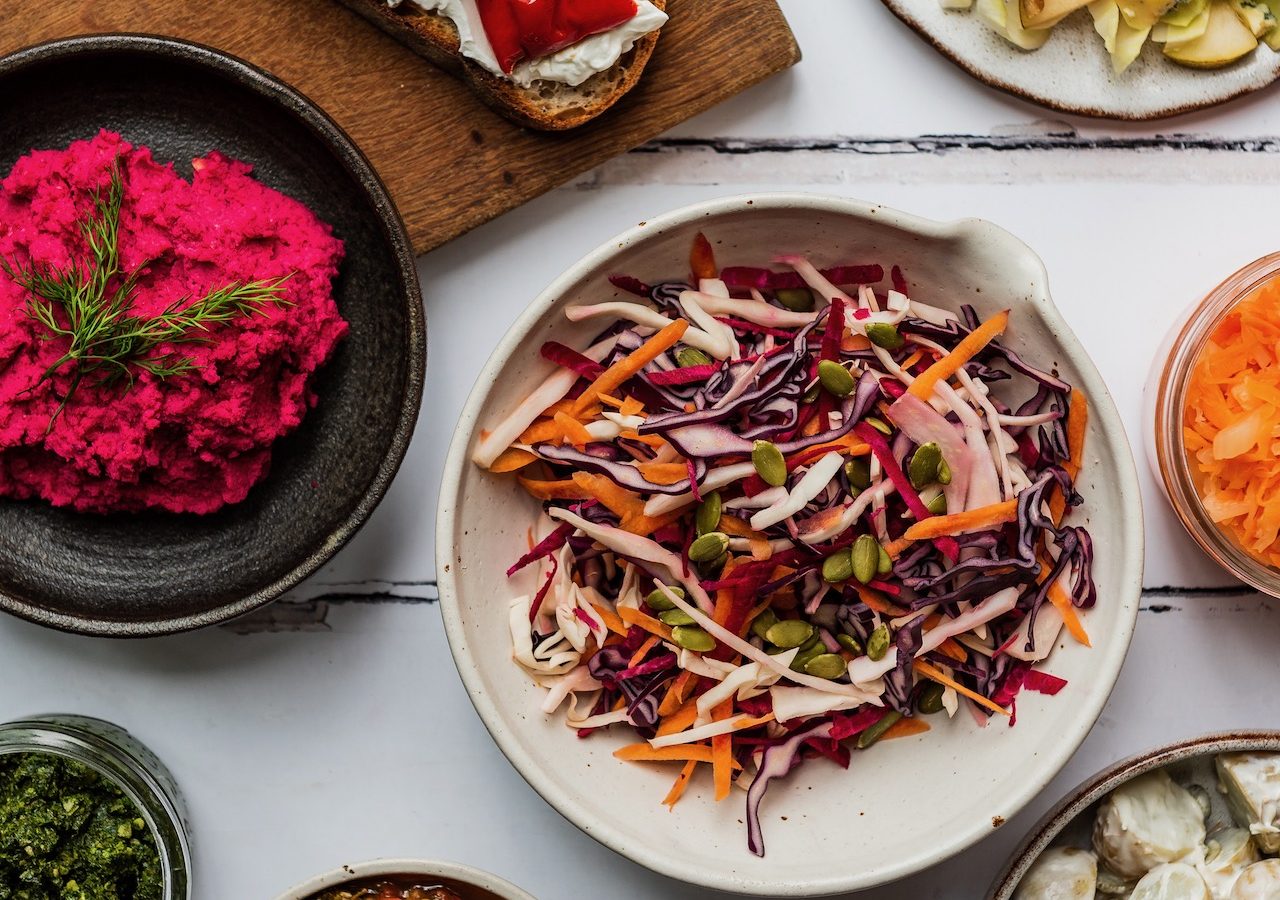
If you follow me on social media, you’ll know that I regularly talk about how we should all ‘eat the rainbow’. I’ve even created a recipe book celebrating the colours that we can enjoy each day!
I thought I’d take a minute to share with you why I believe this is such an important thing to do, and give you some ideas on ways to incorporate more colourful fruit and veg into your daily diets.
The benefits of eating the rainbow
All fruits, vegetables, herbs and spices contain phytonutrients, meaning ‘plant nutrients’. Also called phytochemicals, these nutrients can confer health benefits when consumed, with different colours giving different benefits. It is the phytonutrients that give the plants their vibrant colours, with the darkest-coloured plants having the greatest concentration and often the most significant health benefits.
All phytonutrients are anti-inflammatory and act as antioxidants in the body. This means they mop up free radicals; small, unstable molecules that can cause damage in the body through oxidation.
Think of cutting an apple in half and leaving it out for a day. Fairly soon the exposed flesh will turn brown. However if you rub lemon juice on the cut apple as soon as you’ve sliced it, the oxidation (browning) is barely visible. In the same way, by consuming antioxidants in the foods we eat, we help to reduce oxidation and the chances of illness and disease.
How do the colours give different health benefits?
Again, it’s down to the phytonutrients within each plant. Different phytonutrients are responsible for the different colours. For example:
Yellow and orange – contain carotenoids such as beta-carotene, lutein and zeaxanthin. They have been shown to support eye health in particular.
Dark purple and blue – contain anthocyanins and resveratrol, which have been shown to support heart and brain health amongst others.
Green – contain chlorophyll and isoflavones. These have been shown to help with liver support and detoxification, as well as exerting a mild oestrogenic effect.
And finally, a word for the white and browns. Just because, technically, they’re not part of the rainbow, doesn’t mean that we should forget white and brown plants. They may not be as vibrant to look at, but they too contain phytonutrients that can support liver function and hormone health.
Many of these brightly-coloured fruits and vegetables are also rich in vitamins and minerals that help support a healthy immune system. I think most people would agree that they turn to vitamin C-rich citrus fruits at the first sign of a cold.
How to include more of them in your diet
If the idea of eating a range of colours each day feels daunting, start slowly and build it up. Just committing to buying a couple of different fruit and vegetables each week is a step in the right direction.
Keep adding to your list and soon you’ll be reaching the recommended 30 different varieties in a week! Click here if you fancy taking my challenge.
Some other ways to include more into your diet are:
- Make pestos – any easy way to add some green to your meals. You can serve a spoonful in soups (a tomato minestrone would be a good option) or with pasta. I have a recipe here that you could try.
- Buy a variety of vegetables and herbs, of all different colours. Whizz them up together in a high-speed blender, add a little water, and freeze in ice cube trays. When you are next making a soup or stew, add a couple of ice cubes when sweating onions and/or garlic and you’ll benefit from their colours without even realising!
- If you have younger children, you could get them involved by having a ‘rainbow checklist’ on the fridge and asking them to tick off the colours they eat each day. If there’s one colour that doesn’t do as well as the others, ask them to find those foods the next time you go to the supermarket and try them together.
- Add vegetables to your baking! Beetroot brownies, carrot cake, butternut squash muffins…
- Finally, don’t forget herbal teas. Have a range of brightly-coloured teas in the cupboard, and choose a different one each day.
If you’d like some more ideas to eat the rainbow, download my new recipe book: A Celebration of Colour. I’ve put together a selection of recipes, all of which can be mixed and matched to create delicious meals.
Find out more…
You can read more about phytonutrients and their different properties at Ask the Scientists.
Dr Deanna Minich is the queen of colour! She has a number of downloadable resources on her website.
 Constipation: some things to try…