
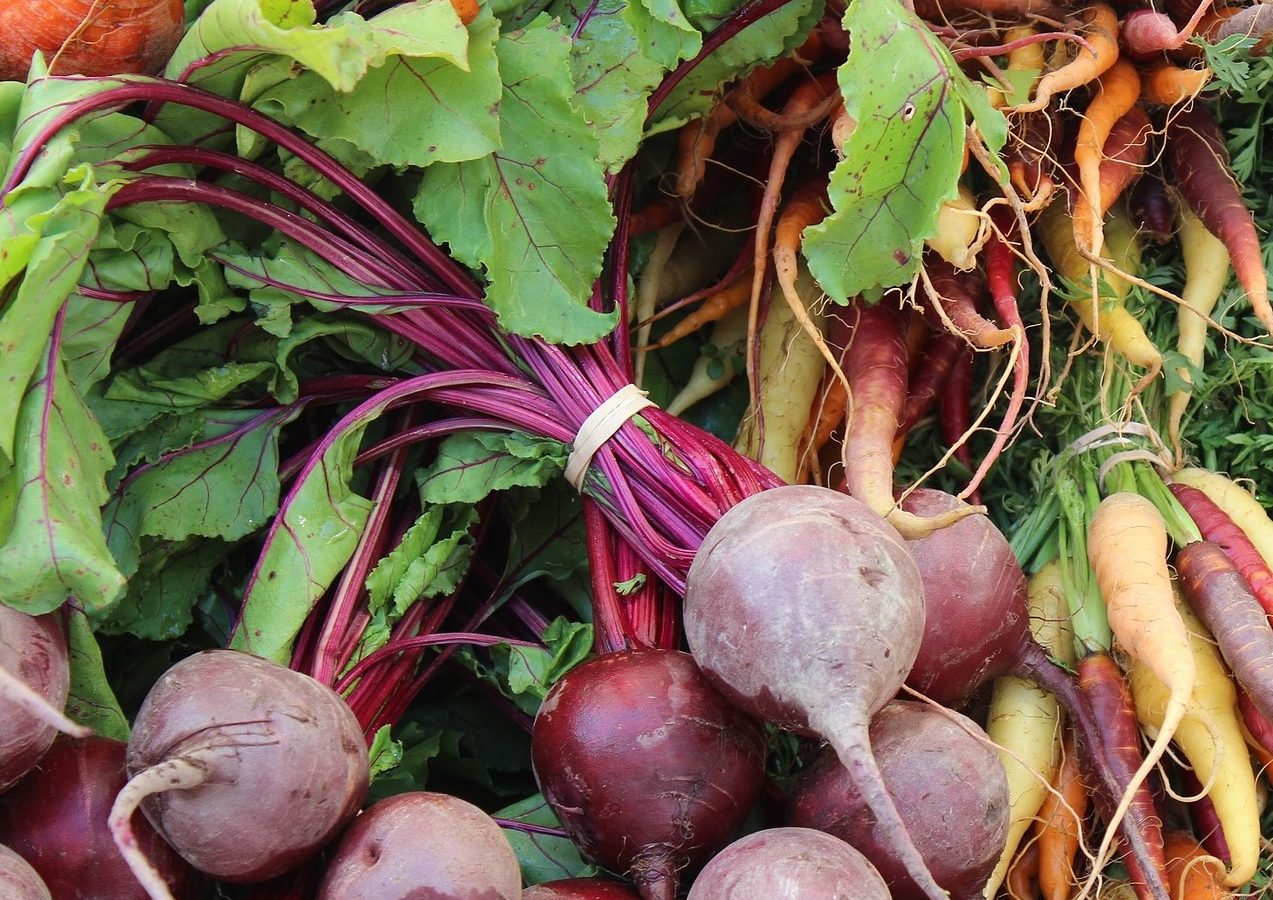
Eating seasonally is something that I’m passionate about. What do I mean by ‘eating seasonally’? Eating the fruits and vegetables that are ready to harvest locally at any given point in the year, rather than choosing produce that appears on supermarket shelves all year round having been flown in from around the globe. I admit that they can be tempting when a recipe calls for strawberries in the middle of winter, but by having an awareness of the seasons and the availability of our foods, small changes can bring a number of benefits:
It’s better for you
Eating seasonally, and therefore locally, reduces the amount of time between picking and eating, meaning that fruit and vegetables are fresher and richer in phytonutrients (plant nutrients) and vitamins when they get to our plates1. Not only that, but eating a greater range of produce throughout the year is a simple way to increase variety in our diets, in turn helping to increase the diversity and abundance of our gut bacteria who, like fussy children, all like feasting on slightly different things!
It tastes better
Have you ever picked a blackberry straight from the bush when out on a walk? How much tastier was it – sharper, sweeter, juicier – than one bought from a shop? Every minute, hour and day that fruit and vegetables sit on a supermarket shelf means a slight loss of flavour, not to mention the weeks of storage that can happen before they reach the shops2.
It supports local farmers
If we are looking to eat according to the seasons, then we are by default eating produce being grown locally. It’s not necessary to visit a local farmers’ market, or subscribe to a box scheme (although both are fantastic ways to shop seasonally) – just check labels in supermarkets and opt for those that are grown in the UK (or wherever you may be reading this!).
It has a lower environmental impact
There’s just no denying that importing fruit and vegetables from around the world comes at a cost, particularly when they are being transported by air3. By shopping locally and in season, unnecessary food miles are reduced, lightening the environmental impact of our weekly shop. Not only that, but imported produce is often picked when un- or under-ripe in order to reach our shelves in good condition, impacting on both flavour and nutrient density.
Follow me on Instagram for a monthly guide to fruit and vegetables in season throughout the year.
1. Wunderlich, S. et al. (2008) ‘Nutritional quality of organic, conventional, and seasonally grown broccoli using vitamin C as a marker’, International Journal of Food Sciences and Nutrition, 59(1), pp.34-45. doi: 10.1080/09637480701453637.
2. The Guardian (2003) Just how old are the ‘fresh’ fruit & vegetables we eat? Available at: https://www.theguardian.com/lifeandstyle/2003/jul/13/
foodanddrink.features18.
3. Saunders, C. and Hayes, P. (2007) Air freight transport of fresh fruit and vegetables. Available at: https://core.ac.uk/reader/35458650.
 Walnut, date and ginger bliss balls